
Video Game Programmer
PROFESSIONAL WORK

PHYSICS BASED RACING GAME
(UNDISCLOSED)
This is an in-house project developed in Unreal Engine 4/5 at Neopica.
I joined the project when it was still in the early prototype stage and was a part of it well into the late alpha stage (near feature complete).
I worked on several gameplay and UI features during my first four months on the project.
After that I researched and developed the self-driving vehicle AI.
The AI controls the vehicle using the same inputs as a player would.
The team was comprised of one designer, seven artists and, at first four programmers, which then increased to seven over the course of the project.

VR EXPERIENCE
(UNPUBLISHED)
I only worked on this Unity project for about a month. This was an outsourced VR project to show of a finished version of a future real world construction project.
When I joined this project, it was already near completion. My job mainly existed of expanding existing features and bug fixing. The features I worked on were mostly UI and gameplay related

VR GAME VERTICAL SLICE
(UNDISCLOSED)
For this project I was the only programmer on the team for almost all of it's development. I worked closely together with several artist, a designer and 2 managers.
The goal of this project was to make a vertical slice for a new in-house VR game in Unreal Engine 4 over the span of roughly 6 months.
Being the only programmer on the team for so long meant that I was responsible for the full development of every feature in the vertical slice (including: gameplay, VR setup, UI, AI, controls, transitions) as well as setting up the project, making some tools and managing source control.

RACING GAME
(UNDISCLOSED)
My first assignment at Cybernetic Walrus, we were outsourced to develop a racing game in Unity in roughly 6 months. During its development, I worked together with 2 other programmers, several artists and a manager.
I was present on this project for most parts of its development, starting during the demo phase and leaving the project when it was nearing completion.
The tasks I worked on were very varied, including a lot of UI programming, developing gameplay features and a camera system. A significant part of my time during development was also spend researching, experimenting with - and implementing machine learning AI.

HUBRIS THE GAME
(UNPUBLISHED)


For this project a had the privilege to be part of a decently sized, very motivated team at Cyborn.
Together with my lead and his team of 4 other programmers I was responsible for full feature development in Unreal Engine 4, using both C++ and blueprints.
I was expected to be a generalist, but despite this, I mostly worked on behavior for hostile creatures during my time working on hubris the game. I developed behavior and implemented the graphics and animations for 3 different variants of a hostile squid and for a hostile tick-like creature.

THE LORD OF THE RINGS: ADVENTURE CARD GAME
I worked on this project with 2 other programmers, my lead and 1 QA.
We were contracted to assist in converting the PC version of the game to Xbox One, PS4 and Switch in Unity.
Most of what we did was UI programming.
I added a few new features, based on descriptions of the functionality and a mock-up, but the bulk of the work was changing the controls and a lot of bug fixing.


VIRTUAL REALITY PROJECT (UNDISCLOSED)
I initially worked on this project with 2 other programmers, our lead and 4 designers.
We were outsourced to do mainly blueprint conversion and to develop new features that our designers might need for their levels In Unreal Engine 4.
Certain features that I was developing required both programming and shader development, so I ended up having the unofficial role of technical artist as well as programmer.
I developed a "radioactive trail" mechanic this way, which works very similar to the witcher sense from the "The Witcher" franchise.
I also converted many large, inefficient blueprint systems to clean, optimized C++ code.
Near the end of the project, 2 new inters were assigned to me. This meant that at this point, I was working as programmer, unofficial technical artist and unofficial lead programmer.
During that month, on top of my ordinary tasks, I also mentored the 2 interns (who had no experience in UE4) and facilitated daily scrum, effort estimation (t-shirt sizes) and kanban follow-up.

STARLINK: BATTLE FOR ATLAS


For this project I worked with 4 other programmers, our lead, 3 designers and an artist. We were working with a version of Ubisoft's Snowdrop engine that was heavily customized for this game.
We were outsourced to develop, finish or fix DLC features for the game. This was done using both visual scripting and C++. The main challenge here was figuring out the engine and the existing code base.
I was tasked to fix an existing level (side mission) and change it according to new design requirements. The idea behind this side mission was a wreck with turrets that should track and shoot the players when they come near that turret and shoot missiles in certain situations. When I started on the project, tracking and shooting the player was not working and the missiles did not exist yet. Later on, I had to make the missiles able to be reflected by the player’s shield, back at the turret, which could then reflect it back again at a higher speed. The turret could reflect the missiles a set number of times and would be stunned when the player succeeded. Unless all other turrets in the vicinity were stunned too, the turret would come back online after a certain amount of time. On all this I worked together with a colleague in pair programming.
I was also responsible for 80-90% of the coding for a completely new enemy, added by the Black Shamrock designers. This new enemy was a hostile mech that is now a mini boss for the outlaw faction in the game. It had to appear in the game in two versions. One of the versions of the enemy is visible between sec 44 and 49 in this Starlink commercial

INTERNSHIP
During my internship I was mostly learning how to work with Unreal Engine 4.
In my first week I made a tweener plugin that could be used in any project.
After that, I started working on a pitch, for an RPG, that one team was working on.
The team consisted of 5 other programmers, my lead and me and the pitch was made using UE4.
While working on this pitch, I worked on a grapple hook mechanic, made a modular magic system, improved existing inverse kinematics and learned about multiplayer networking in UE4.
PERSONAL WORK

ANT BOUNCE


This is my first published personal project.
It is a simple casual mobile game that can be found here on the google play store and played for free.
I made this project on my own in Unity with the goal of publishing my first game. I did all the programming, art, level design, etc. myself and even wrote a few tools to make my life easier.
By going trough every part of development as a one-person team, I learned a lot of new things about coding and about the engine. On top of this I also learned more about how to manage my time efficiently and planning the work that needs to get done.


COLLEGE WORK

SHOP TILL YOU DROP


This game was made in Unity3D for a group assignment in the 4th semester of DAE.
I was a part of a team of 5, comprised of 2 artists and 3 programmers (including myself).
Some of the things I worked on include:
random level generation, dash attack, menus and other UI programming, level design, particles, ...
A release build of the game is on github

SOUND PREDICTING NEURAL NET
This is a personal project which served as part of the programming exam in the 4th semester of DAE.
I was curious about how neural networks work and I had recently discovered WaveNet. So I wanted to see if I could make something similar myself.
The neural net reads a certain amount of values in a .wav file and predicts the next value based on that and previous learning. After this, the net reads what the correct value was and adjusts itself depending on the error. All predicted values are written to a new .wav file so I can hear how the net did.
The source code and release build are on github

CHEF TOAD WORLD CUISINE


This game was a group assignment in the 3th semester of DAE, made in Unity3D.
We were told to make a game in the style of "captain toad treasure tracker", but we could come up with the game mechanics and graphics ourselves.
I was joined, in a team of four, by two artists and one other programmer.
Some of the things I did, include:
throwables, patrolling enemies, deadly pools, translatable/rotatable parts of levels, some UI programming, level design of level 2, ...
Once again, you can find a release build on github

TEXT BASED ADVENTURE GAME
As the second part of the programming exam is the 4th semester of DAE, I made a text based adventure game.
We had to make the game from scratch and it had to be data driven.
All the source code is on github


HEXAGON-GRID SHADER
In the 4th semester of DAE I learned about shader programming.
The exam for this was to write our own geometry shader in HLSL and write a paper about it.
The shader code and the paper are on github


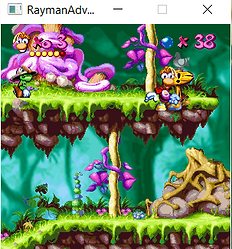
SIMPLE 2D SIDE SCROLLER
In the 2nd semester of DAE, we had to recreate an existing 2D side scroller. We had to use a simple 2D engine that was provided and sprites which we got online.
I recreated Rayman advance for the gameboy advance (on pc)




UNREAL TOURNAMENT LEVEL
In the 3th semester of DAE I had a course called level editing. This course was mainly focused on teaching us about level editing and how to work in the Unreal engine.
This entire level was designed by me in the Unreal engine for the game "Unreal tournament". Every model, material, texture and particle effect in the level is made by me. (except for weapons and pickups)
There was no programming involved in this project, it only proves that I can work with Unreal and that I have a decent knowledge of the 3D and level editing pipelines.


